All over Huế, mostly at breakfast
Bún bò Huế
A bowl that carries the story of Vân Cù noodle village, of the market, and of a city that eats breakfast from a broth of bones, lemongrass and shrimp paste.
The story
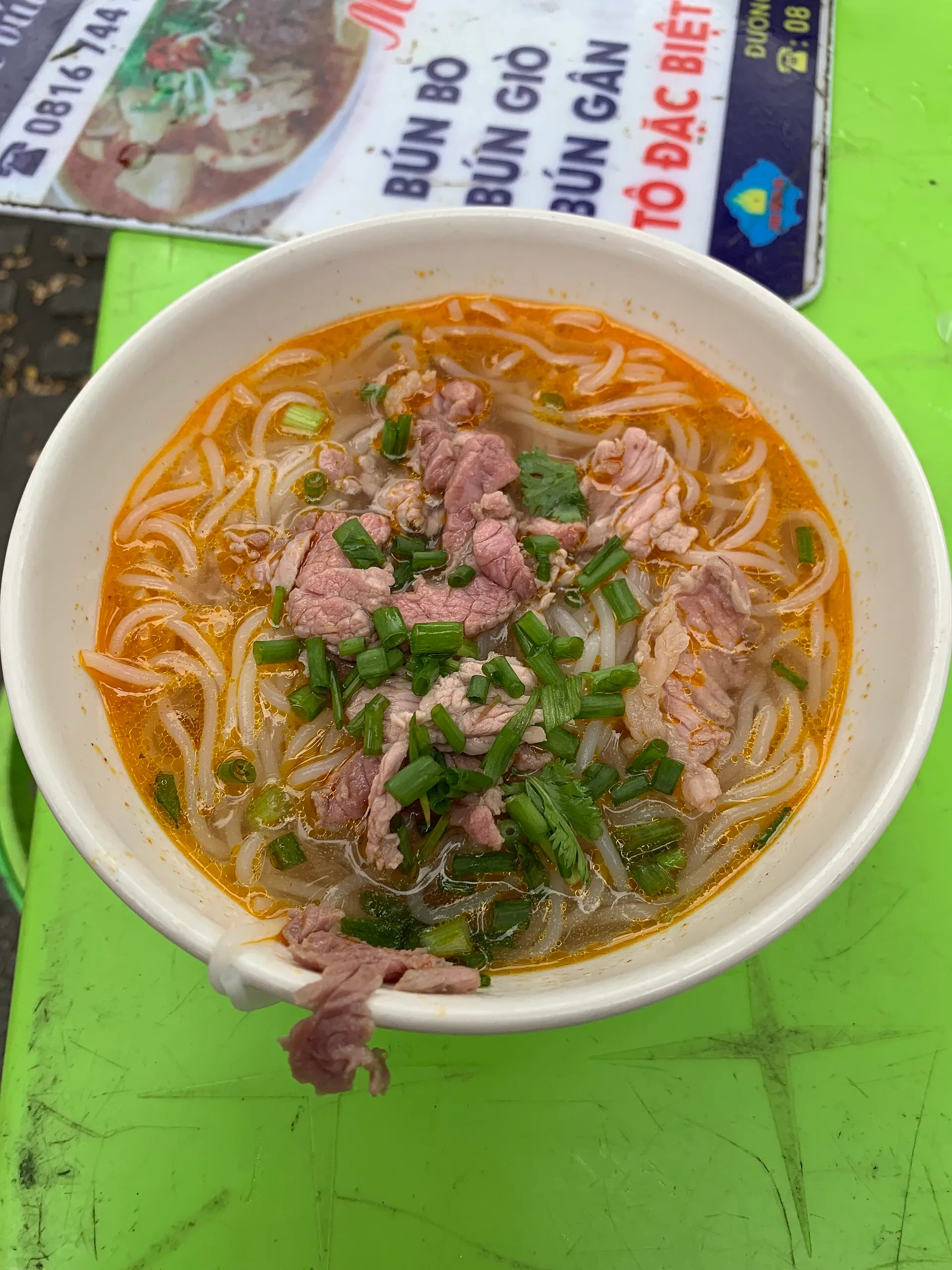
At seven in the morning you sit down at a low table in a shop that opened at dawn. In front of you is a steaming bowl: reddish broth, a few slices of beef, a round of pork knuckle, a plate of herbs and a saucer of chilli on the side. In Huế this is ordinary breakfast, not a special-occasion dish. People eat quickly before work, and every shop keeps its own pot of broth.
Nobody knows exactly when the dish appeared. One common account ties it to Vân Cù, the noodle-making village considered the cradle of Huế's rice noodles and nearly four hundred years old. Legend names Cô Bún as the craft's ancestor, one of the settlers who followed Lord Nguyễn Hoàng south. The noodles travelled from that village to the market, then into homes, and finally into a bowl named after the whole region.
What makes the bowl is the broth. Pork and beef bones are simmered for hours with crushed lemongrass, shrimp paste and a little chilli or satay oil for colour and heat. It is not as clean-tasting as phở: saltier, deeper, with the smell of shrimp paste and lemongrass clearly present. The noodles are round and lightly chewy. On top go thin slices of beef, pork knuckle and sausage, with herbs, banana blossom, bean sprouts and chilli alongside.
Do not season it straight away. Take a spoonful of broth first, then squeeze in lime and add chilli if you want. Huế locals eat fairly hot; if you are not used to it, keep the chilli aside and try a little first. The noodles and broth are the fixed part; the herbs are what change with the season and the shop.
The dish has been listed among the 100 Asian dishes of culinary value by the Asian Record Organisation, but in Huế it remains a matter of every morning. When you finish, remember the lemongrass and the shrimp paste — the two things that make this bowl impossible to confuse with any other noodle soup.
What to look for
- The red of the broth, which comes from chilli and satay oil rather than annatto.
- Round, lightly chewy noodles, unlike flat or thick rice noodles.
- The herb plate beside the bowl: shredded banana blossom, bean sprouts, fresh herbs.
- The separate saucer of chopped chilli — you decide the heat.
Getting there & etiquette
- Breakfast is the usual time; many shops open only in the morning and sell out early.
- Ask first if you cannot eat shrimp paste — it is the soul of the broth.
- There is no single “original” shop; pick one busy with locals in the morning.
- Prices and hours vary — ask before travelling across town.