Sình (Lại Ân) village, about 9 km downstream on the Hương River
Sình painting village
Woodblock prints made to be burned after offerings — and now something visitors print themselves and take home.
The story
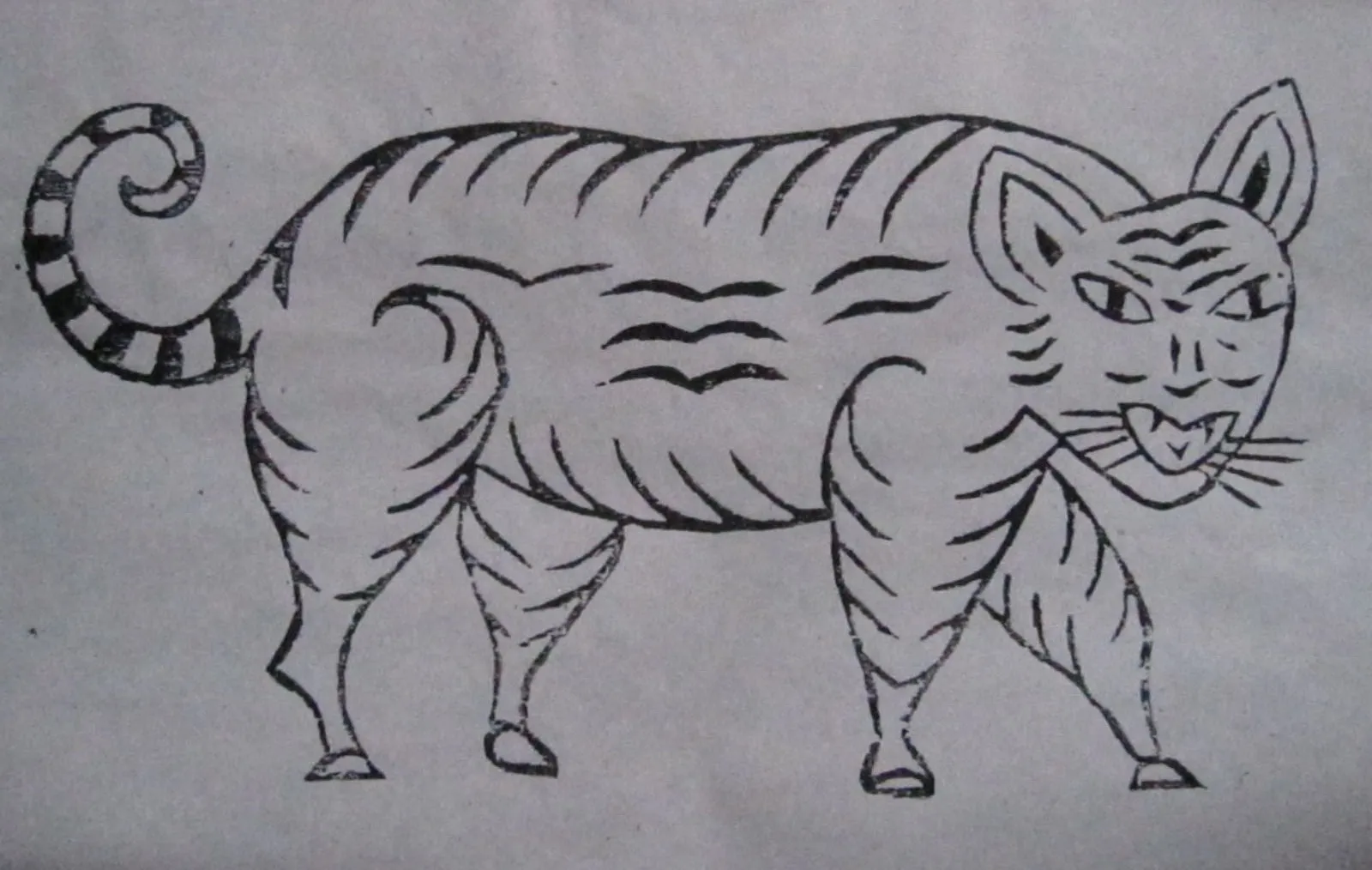
You travel about nine kilometres downstream on the Hương River, leave the city behind, and enter Sình village — formally Lại Ân. In a low room, a table holds carved wooden blocks, sheets of dó paper and dishes of colour. The printer inks a block, lays paper on it, smooths it flat with a hand, and lifts a print that carries only black lines. The colour is added afterwards, by hand.
Sình prints are nearly four hundred years old. They belong to the tradition of votive prints: people buy them for offerings and burn them when the ritual is over, so few survive. There are about fifty subjects in three groups — figures, objects and animals — reflecting the old beliefs of a farming community.
The paper is dó paper, or a rougher paper coated with điệp shell powder; the colours come from natural materials, dominated by blue, yellow, red, black and green. The blocks are carved from wood. The printing method is distinctive: the paper is laid on the inked block and rubbed by hand, taking up only the black lines and masses; colour is applied later, so every print differs slightly.
After 1945 and 1975 the craft declined and many blocks were lost. The artisan Kỳ Hữu Phước is credited with reviving the tradition, saving old blocks and passing on the printing method. From around 2000, Sình prints reached visitors; the village added decorative prints and twelve-zodiac calendars, and began running printing sessions for guests.
The strange thing is that a tradition made to be burned has become something people want to take home. Try printing one and you understand why: each sheet passes through a human hand, and no two are exactly alike. Buy a small print, ask what the subject is called, and keep it as a piece of a village that once printed images for both the dead and the living.
What to look for
- The carved wooden blocks, inked in black, printed face-up with paper laid on top.
- Dó paper or điệp-coated paper — thick and slightly rough to the touch.
- Colour applied by hand after printing, so the patches never match exactly.
- The subjects: figures, objects, animals — and the twelve-zodiac calendars made for visitors.
Getting there & etiquette
- The village lane is narrow; take a motorbike or small car and ask for the artisan's workshop.
- Call ahead for a printing session, especially for a group.
- Buy prints directly in the village; ask the name of the subject and how to store it.
- Hours vary — come in the morning and avoid major holidays.